No Man's Sky
The most remarkable comeback in gaming history. Launched to universal disappointment, torn apart publicly — then quietly rebuilt into something genuinely extraordinary over years of free updates.
No Man's Sky: How to Recover From Almost Anything
The Hype
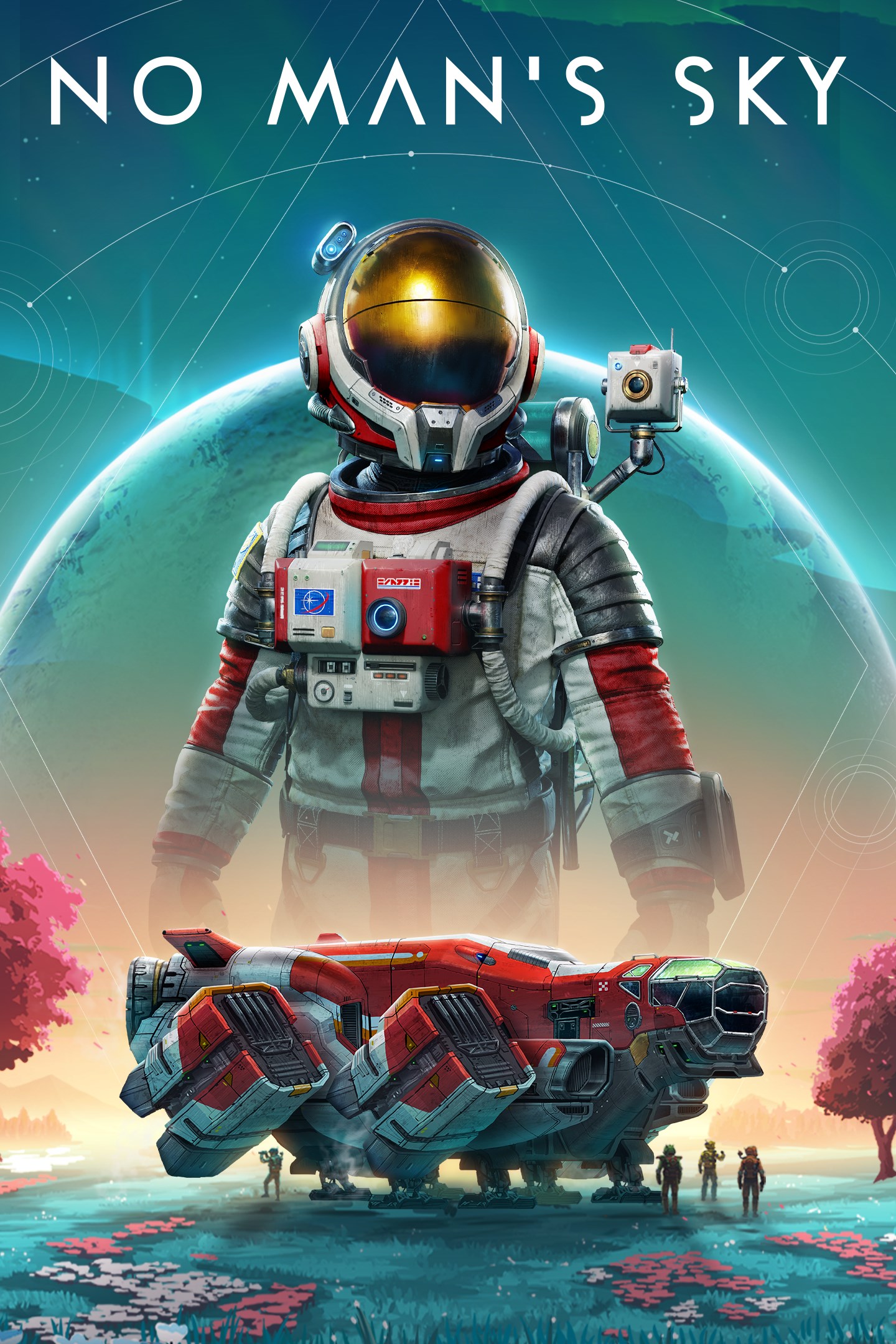
Few games have ever generated the kind of pre-launch excitement No Man's Sky did. When Hello Games founder Sean Murray first showed the game at E3 2014, the reaction was immediate and enormous — here was a tiny indie studio promising something that felt genuinely impossible: an effectively infinite, procedurally generated universe where every planet, creature, and star system was unique, and where players existed in a shared world together.
The coverage never stopped. Murray appeared on The Late Show with Stephen Colbert in 2015. Sony backed it with a full marketing push. Gaming media spent two years running breathless features on the ambition of it. By the time August 2016 arrived, No Man's Sky was one of the most anticipated games in recent memory — carrying the weight of years of interviews, promises, and a community that had collectively imagined something extraordinary.
The specific promise that would matter most: multiplayer. Murray had stated repeatedly that players shared a universe, and that if two people somehow found each other across its vastness, they would see each other's avatars.
On launch day, two players found each other. They saw nothing.
The Collapse
The backlash was immediate and severe. Within days it was clear the game had shipped without several features that Murray had discussed in interviews — not just multiplayer, but various mechanics and systems players had come to expect. A Reddit post cataloguing the discrepancies went viral. Reviews cratered. The Steam rating landed at Overwhelmingly Negative.
Then Hello Games went quiet.
For two months following launch, Murray — who had been a constant, enthusiastic presence on social media throughout development — essentially disappeared. Hello Games issued patch notes for technical fixes but made no direct statement about the missing features, the multiplayer situation, or the community's fury. The silence read as confirmation of every accusation being levelled at them.
Murray later acknowledged that Hello Games had lost control of the expectation-building entirely. A small studio making an ambitious game had been put in front of cameras, on late-night television, in front of Sony's marketing machine — and had said yes to all of it, said yes to questions about features that were aspirational rather than confirmed, and watched the resulting hype build into something no product could have satisfied.
The post-launch silence was partly the natural consequence of a tiny team under enormous pressure just trying to keep the game functional. But it compounded the damage badly. Every day without a response was another day the narrative wrote itself.
The Decision
What happened next is what makes No Man's Sky worth studying.
Hello Games could have moved on. The game had sold well on the back of its hype — enough to keep the studio alive. They could have issued a quiet apology, done some minor patches, and let the whole thing fade. Most studios in that position would have.
Instead, they put their heads down and started building.
The Foundation update arrived in November 2016, three months after launch. No press release, no apology tour, no explanation — just a substantial free update that added base building, new game modes, and a meaningful expansion of what the game was. It was accompanied by a single blog post. Murray tweeted an emoji.
That became the template. Update after free update, each one announced with minimal fanfare and delivered without ceremony. Pathfinder in March 2017. Atlas Rises in August 2017 — the one-year anniversary update that added a proper story, portals, and the first steps toward actual multiplayer. NEXT in July 2018, the two-year anniversary update that delivered full multiplayer at last, the feature that had defined the betrayal, now real and functional and free.
Hello Games had quietly developed an approach to communicating that was almost the inverse of what got them into trouble: say almost nothing until the thing is ready, then ship it. No promises. No hype. An emoji tweet a day or two before release. Let the work speak.
The Turnaround
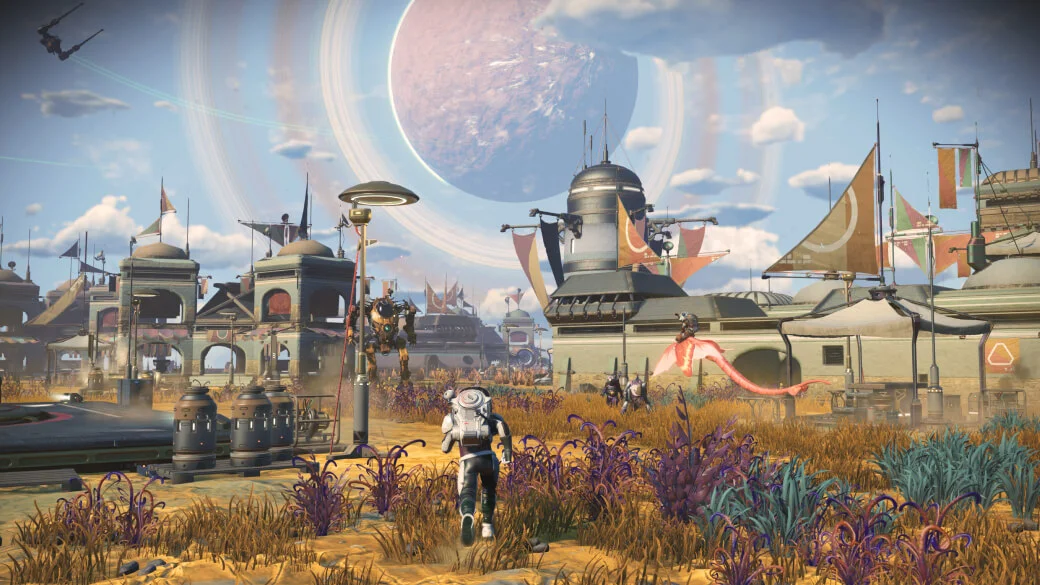
By 2019, the Steam reviews had moved to Mostly Positive. The word "redemption" started appearing in headlines. Players who had refunded or abandoned the game came back and found something that had grown far beyond what launched in 2016. New players arrived with no memory of the controversy and encountered a game that had been substantially rebuilt.
The updates kept coming. Beyond in 2019 added VR support and a social hub for up to 32 players. Origins in 2020 overhauled planetary diversity. Next Generation in 2020 rebuilt the game for PS5 and Xbox Series X, free for existing owners. Expeditions in 2021 added limited-time community events. By the time of its five-year anniversary, No Man's Sky held a Very Positive rating on Steam — representing over 80% positive reviews — having started at Overwhelmingly Negative.
As of 2024, the game has received over 25 major free updates across eight years. It peaked at over 100,000 concurrent players on Steam following the Voyagers update in 2024 — eight years after launch. Every update has been free. The game costs the same $60 it launched at.
The community that once organised petitions demanding apologies and investigations into false advertising now describes No Man's Sky as the poster child for how a developer should handle a bad launch. Steam discussions on its eighth anniversary are full of players calling it the best redemption arc in gaming history. Murray celebrated the 100k milestone by posting a Bollywood clip.
What Actually Happened Here
No Man's Sky is not a story about a developer who lied and got away with it. It's also not purely a story about a developer who made good. It's more specific than either of those.
The pre-launch failure was a communication failure of a particular kind: Hello Games let the hype machine run without managing it. Murray is genuinely passionate and genuinely enthusiastic, and he was put in front of cameras and asked questions about his game for two years straight. He talked about things that were aspirational, things that were in progress, things he hoped would be true — and didn't clearly differentiate those from confirmed features. The gap between what was discussed and what shipped wasn't cynical; it was the result of a small team losing control of a narrative that grew bigger than they could steer.
The post-launch recovery worked for one reason above all others: Hello Games delivered. Not once, not in a single redemptive update, but consistently, over years, for free. Each update wasn't just content — it was evidence. Evidence that the studio was still there, still working, still committed. The community learned to trust the emoji tweets because the emoji tweets kept delivering.
There's also something important in what Hello Games didn't do during the recovery. They didn't run a PR campaign. They didn't give interviews about how hard they'd been working or how unfair the criticism was. They didn't ask for credit. They just shipped things, let players discover them, and let the work rebuild the relationship without trying to accelerate it through messaging.
The lesson isn't "overpromise and then patch your way to forgiveness." The lesson is more uncomfortable than that: if you find yourself in a hole this deep, the only way out is sustained, genuine, unglamorous effort over a very long time — and the humility to do that work without demanding recognition for it until the audience decides to give it.
No Man's Sky was developed by Hello Games and published by Hello Games and Sony Interactive Entertainment. It launched August 9, 2016 on PS4 and PC. It currently holds a Very Positive rating on Steam after more than 25 major free updates.